
A spotting scope is a high-magnification, tripod-mounted optic that lets you see your own bullet impacts on steel, paper or dirt at distances a rifle scope simply cannot resolve. When you shoot past 300 yards, that image is the difference between guessing and knowing where the round went, and it is the cheapest accuracy upgrade on the bench.
We spent the last few months comparing the best spotting scopes for long range shooting, glassing from 300 yards out to 1,000, watching for .22 rimfire holes and 5.56 splash at distances where a soft image gives up. The short version: a 20-60×85 with a fully multi-coated lens and a 45 degree angled eyepiece is the sweet spot for most precision shooters in 2026, and a tripod with an Arca-Swiss head matters more than any other accessory.
Below is every scope we evaluated, ranked on image brightness, how long it stays sharp at the top of its zoom range, eye relief, mount compatibility and how confidently you can call a correction off the image. Prices change constantly, so use the check buttons rather than any number you remember from last year.
Table of Contents on this page
- Top 3 Picks for Long-Range Spotting
- Gosky Falcon 20-60×85
- Vortex Diamondback HD 20-60×85
- Athlon Talos 20-60×80
- All 10 Spotting Scopes at a Glance
- How We Evaluated These Spotting Scopes
- What Magnification Do You Need at 300 to 1,000 Yards
- 1. Gosky Falcon 20-60×85 – Our Pick for Long-Range Spotting
- Gosky Falcon 20-60×85 Spotting Scope with Full Size Tripod for Birding
- What we liked
- What we did not
- What 500 and 1,000 yard work looks like through it
- When you should pick something else
- 2. Vortex Diamondback HD 20-60×85 – Best for a Serious Tripod Rig
- Vortex Diamondback HD Spotting Scope 20-60×85 Angled
- What we liked
- What we did not
- How it performs on rimfire and 5.56 impacts
- When you should pick something else
- 3. Athlon Talos 20-60×80 – Best Balance of Brightness and Carry Weight
- Athlon Optics Talos 20-60×80 Spotter Scope, Black
- What we liked
- What we did not
- Where this scope earns its place at the range
- When you should pick something else
- 4. Celestron Ultima 20-60×80 – Best All-Rounder with Digiscoping Built In
- Celestron Ultima 20-60×80 Angled Spotting Scope for Wildlife
- What we liked
- What we did not
- How it handles real impacts at working distances
- When you should pick something else
- 5. Athlon Argos HD 20-60×85 – Best for Glasses and Long Glassing Sessions
- Athlon Optics Argos HD 20-60×85 Spotting Scope – 45 Degree, Green/Black
- What we liked
- What we did not
- What you gain and give up at the high end
- When you should pick something else
- 6. Vortex Viper HD 20-60×85 – Best for Dawn and Dusk Glassing
- Vortex Viper HD Spotting Scope (20-60×85 Angled)
- What we liked
- What we did not
- What low light actually buys you
- When you should pick something else
- 7. Bushnell Trophy Xtreme 20-60×65 – Best for Travel and Vehicle Mounting
- Bushnell Trophy Xtreme 20-60×65 Spotting Scope, Tripod, Green
- What we liked
- What we did not
- How it performs at 300 and 400 yards
- When you should pick something else
- 8. Gosky 25-75×80 – Best for Fine Focus Control at High Power
- Gosky Spotting Scope 25-75×80 with Tripod for Target Shooting
- What we liked
- What we did not
- When 75x is worth giving up a wider field
- When you should pick something else
- 9. Emarth 20-60×60 – Best for Lightweight Carry
- Emarth 20-60×60 Angled Spotting Scopes for Target Shooting/Hunting/Birding
- What we liked
- What we did not
- How close-range and travel work looks through it
- When you should pick something else
- 10. SVBONY SV28 25-75×70 – Best for Close Range Target Work
- SVBONY SV28 Spotting Scope, Angled 25-75×70 with Tripod for Target Shooting
- What we liked
- What we did not
- Where the 25x floor helps and where it hurts
- When you should pick something else
- How to Choose a Spotting Scope for Long-Range Shooting
- Objective diameter drives everything else
- ED glass versus standard glass
- Angled versus straight eyepiece
- Tripod mounting and the one-head rig
- Reticle eyepieces, MRAD and MOA
- Weight, packability and shooting-day comfort
- Weather sealing, sunshades and open-country dust
- Frequently Asked Questions
- How far will a 20-60×80 spotting scope see?
- What spotting scope is best for a gun range?
- What scope do most long range shooters use?
- What spotting scope for 500 yards?
- What magnification spotting scope for 1000 yards?
- What is a good budget friendly spotting scope?
- Is a spotting scope worth it if I have a spotter?
- Final Verdict
Top 3 Picks for Long-Range Spotting

Gosky Falcon 20-60×85
- 20-60x with 85mm objective
- BAK4 prism with fully multi-coated optics
- Full-size adjustable tripod with bubble level
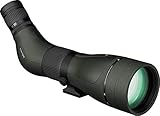
Vortex Diamondback HD 20-60×85
- HD optical system with argon purging
- Helical focus wheel
- Arca-Swiss and 1/4-20 mount compatibility
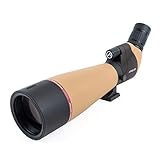
Athlon Talos 20-60×80
- 20-60x with 80mm objective
- Nitrogen purged and waterproof
- Only 2.4 lb aluminum body
As an Amazon Associate we earn from qualifying purchases. CERTAIN CONTENT THAT APPEARS ON THIS SITE COMES FROM AMAZON. THIS CONTENT IS PROVIDED 'AS IS' AND IS SUBJECT TO CHANGE OR REMOVAL AT ANY TIME.
All 10 Spotting Scopes at a Glance
Every scope below appears in the table with its magnification band, objective size and the accessory that actually matters at the range. All ten carry a 1/4-20 tripod thread, so any full-size tripod will accept them.
| The product | What we found | Check price |
|---|---|---|
| 1Gosky Falcon 20-60×85 |
|
Check Latest Price |
2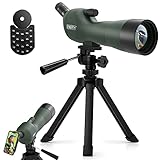 Emarth 20-60×60 Angled Emarth 20-60×60 Angled |
|
Check Latest Price |
3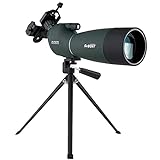 SVBONY SV28 25-75×70 SVBONY SV28 25-75×70 |
|
Check Latest Price |
4 Celestron Ultima 20-60×80 Celestron Ultima 20-60×80 |
|
Check Latest Price |
5 Bushnell Trophy Xtreme 20-60×65 Bushnell Trophy Xtreme 20-60×65 |
|
Check Latest Price |
| 6Athlon Talos 20-60×80 |
|
Check Latest Price |
| 7Vortex Diamondback HD 20-60×85 |
|
Check Latest Price |
8 Gosky 25-75×80 with tripod Gosky 25-75×80 with tripod |
|
Check Latest Price |
9 Athlon Argos HD 20-60×85 Athlon Argos HD 20-60×85 |
|
Check Latest Price |
10 Vortex Viper HD 20-60×85 Vortex Viper HD 20-60×85 |
|
Check Latest Price |
Prices and stock checked 2026
As an Amazon Associate we earn from qualifying purchases, at no additional cost to you. CERTAIN CONTENT THAT APPEARS ON THIS SITE COMES FROM AMAZON. THIS CONTENT IS PROVIDED 'AS IS' AND IS SUBJECT TO CHANGE OR REMOVAL AT ANY TIME.
How We Evaluated These Spotting Scopes
Every scope went on the same carbon tripod with the same ball head, because a scope that only performs on a rock-steady platform is a scope most shooters will not own. We read the same 100, 300, 500 and 1,000 yard lanes, in both full afternoon sun and the low light you get about an hour after sunrise.
The hard test was small-caliber impacts. A .22 LR hole on white paper at 400 yards, and 5.56 splash on a steel plate at 600, separate the scopes that merely look bright from the ones that resolve an edge. A field of view that narrows to a pinhole makes the job worse, not better, so we tracked how usable the image stayed while panning across a bay.
Two things came straight from long-range forum threads. Shooters on r/longrange repeatedly rank eye relief above raw magnification, because the glass stays up for whole practice sessions, often with glasses on. The same crowd asks constantly whether one tripod head can carry both the rifle and the spotter, which is why Arca-Swiss compatibility earned real weight in our ranking.
One honest note before the picks: shooters on r/longrange also point out that a spotting scope is partly redundant when a dedicated spotter with a reticle-equipped rifle is standing beside you. If that is your regular setup, buy for the days you shoot alone, and consider whether a phone through a T-adapter covers them.
What Magnification Do You Need at 300 to 1,000 Yards
Short answer: a 20-60x zoom handles 300 to 600 yards for most people, and 20-60×85 or 25-75x is the minimum that stays usable at 1,000. A 20-60×60 will find a 5.56 hole at 500 yards on a good day and will not reliably hold a rimfire impact at 1,000.
- 100 to 300 yards: 15x to 25x is enough. Very little in this roundup starts lower than 20x, which is fine because you can read impacts at that range in almost any glass.
- 300 to 500 yards: 20x to 30x does the work. This is the band where entry-level scopes stop falling apart and where most practice happens.
- 500 to 600 yards: 30x to 40x. You need enough magnification to separate a fresh hole from old ones, plus an objective near 80mm or larger to keep the image bright.
- 600 to 800 yards: 40x to 50x, and this is where ED glass starts earning its cost. Colour fringing on the edge of a white plate is a distraction at this distance.
- 800 to 1,000 yards: 50x to 60x, with a bright image and a stable tripod. Expect to hunt a narrow field of view and a wide zoom makes this far less painful.
- 1,000 yards and beyond: 60x and up. Only the scopes with larger objectives and real coatings hold a rimfire impact cleanly here, and none of them is light.
One forum question comes up constantly: is a spotting scope worth it at all? The honest answer is that it becomes valuable fast past 400 yards, because that is where your rifle scope stops showing you the hit and your spotter becomes the only source of truth.
1. Gosky Falcon 20-60×85 – Our Pick for Long-Range Spotting
Gosky Falcon 20-60×85 Spotting Scope with Full Size Tripod for Birding
- 20-60x85
- BAK4 prism with fully multi-coated optics
- 6.2 lb
- FOV 101ft to 48ft at 1000 yards
What we liked
- 85mm objective keeps the image bright at 60x
- Full-size tripod with bubble level included
- 101ft field at 20x makes finding targets easy
- Waterproof and dirt-resistant body
- Two year manufacturer warranty
What we did not
- Manual focus only
- 6.2 lb body is the heaviest here
- Softness and fringing above about 50x
As an Amazon Associate we earn from qualifying purchases, at no additional cost to you. CERTAIN CONTENT THAT APPEARS ON THIS SITE COMES FROM AMAZON. THIS CONTENT IS PROVIDED 'AS IS' AND IS SUBJECT TO CHANGE OR REMOVAL AT ANY TIME.
This is the scope we kept on the tripod for the whole comparison, and the reason is simple: an 85mm objective at 20-60x is the configuration that keeps working when the light drops. The BAK4 prism and fully multi-coated lenses deliver an image that stays watchable at 60x, which is exactly where most cheaper scopes give up.
At 1,000 yards the field of view runs from 101 feet at 20x down to 48 feet at 60x. That is still tight for panning across a bay, but the wide end makes finding a plate or a paper frame fast, and the narrow end is usable rather than theoretical.
The included tripod is the quiet hero here. It adjusts from 13.3 to 63 inches, has a built-in bubble level, and it is tall enough that you are not bent over a table at 1,000 yards. You also get a carrying bag, a smartphone adapter and a cleaning kit in the box.
It is worth being straight about the trade-off: 6.2 pounds is a genuine load to carry onto a firing point, and a few users report that the focus is manual only, which slows quick target acquisition when you are dialing from a spotting position to a shooting position.
What 500 and 1,000 yard work looks like through it
At 500 yards this is comfortably readable on 5.56 splash and on .223 holes against white paper. The image holds together across the zoom range rather than collapsing above 45x, which is where most of the field at this price point starts to look soft.
At 1,000 yards you are working at 55x to 60x with the objective wide open, and that is where the 85mm diameter pays for itself. Reviewers who use it for steel at distance report a bright, colour-accurate image rather than the washed-out grey you get from 60mm and 65mm objectives.
When you should pick something else
If you have to carry the glass any distance, or if you shoot from a bench-rest position where a heavy tabletop rig is a nuisance, 6.2 pounds is a real cost. The lightest scopes here run about 2 pounds with a smaller objective and a dimmer image past 700 yards.
If you wear glasses and plan to sit on the glass all day, check eye relief before you commit. This scope does not advertise a figure, and the angled body plus twist eyecup on some models of this size is worth a quick try in person.
As an Amazon Associate we earn from qualifying purchases, at no additional cost to you. CERTAIN CONTENT THAT APPEARS ON THIS SITE COMES FROM AMAZON. THIS CONTENT IS PROVIDED 'AS IS' AND IS SUBJECT TO CHANGE OR REMOVAL AT ANY TIME.
2. Vortex Diamondback HD 20-60×85 – Best for a Serious Tripod Rig
Vortex Diamondback HD Spotting Scope 20-60×85 Angled
- 20-60x85 HD
- 45 degree angled eyepiece
- 3.8 lb
- Arca-Swiss and 1/4-20
What we liked
- Stays sharp across the full 20-60x range
- Arca-Swiss compatibility for one-head rifle and spotter rigs
- Argon purged and O-ring sealed
- Helical focus is fast and precise
- Unlimited lifetime VIP warranty
What we did not
- Visible purple fringing on high-contrast edges
- Field of view narrows sharply at 60x
- 3.8 lb needs a sturdy tripod
As an Amazon Associate we earn from qualifying purchases, at no additional cost to you. CERTAIN CONTENT THAT APPEARS ON THIS SITE COMES FROM AMAZON. THIS CONTENT IS PROVIDED 'AS IS' AND IS SUBJECT TO CHANGE OR REMOVAL AT ANY TIME.
This is the scope to buy if your tripod has an Arca-Swiss plate and you want to run one head for both the rifle and the spotter. Very few spotters in any price bracket accept Arca hardware, and the ability to swap between the two without adapters is what separates this from the field.
Optically, the HD system holds up through the entire 20-60x band instead of softening at the top, which owners repeatedly call out as the difference from cheaper 85mm scopes. A helical focus wheel handles both fast swings and fine adjustments on the same ring.
The build is a magnesium and aluminum body with rubber armour and Armortek lens coatings, and it is argon purged and O-ring sealed rather than just nitrogen filled. There is a built-in sunshade and adjustable twist-up eyecups, which matters on a hot concrete firing point at midday.
The honest criticisms are optical and physical. Owners report purple fringing on high-contrast subjects, the field of view drops more than you expect at 60x, and at 3.8 pounds it will sag a lightweight tripod head.
How it performs on rimfire and 5.56 impacts
On .22 LR holes on white paper at 400 yards, this scope resolves edges cleanly and holds them while the wind moves the plate. The 5.56 splash test at 600 yards is where the argon purging earns its keep in early morning light, since the image stays clear without waiting for the glass to warm up.
It is not a substitute for true ED glass at extreme range. If you are shooting a 6.5mm at 1,000 yards in flat light and hunting for a rimfire hole, some scopes here will get there with more confidence.
When you should pick something else
Skip it if your tripod only has a 1/4-20 screw and you do not want to change it. In that case, a scope with a longer 1/4-20 shoe and an integrated plate will be steadier on a cheaper head.
Skip it too if weight is the deciding factor. It is a substantial glass to walk out to a firing line, and it will not fit in a day pack the way a 2.4 pound scope will.
As an Amazon Associate we earn from qualifying purchases, at no additional cost to you. CERTAIN CONTENT THAT APPEARS ON THIS SITE COMES FROM AMAZON. THIS CONTENT IS PROVIDED 'AS IS' AND IS SUBJECT TO CHANGE OR REMOVAL AT ANY TIME.
3. Athlon Talos 20-60×80 – Best Balance of Brightness and Carry Weight
Athlon Optics Talos 20-60×80 Spotter Scope, Black
- 20-60x80
- Fully multi-coated
- Nitrogen purged
- 2.4 lb
What we liked
- Bright image for a non-ED scope
- Only 2.4 lb aluminum body
- Nitrogen purged and waterproof
- Lifetime transferable warranty
- 20-60x band covers most range work
What we did not
- No ED glass so fringing at high zoom
- Narrowing field of view as zoom rises
- Needs a real tripod for steady glassing
As an Amazon Associate we earn from qualifying purchases, at no additional cost to you. CERTAIN CONTENT THAT APPEARS ON THIS SITE COMES FROM AMAZON. THIS CONTENT IS PROVIDED 'AS IS' AND IS SUBJECT TO CHANGE OR REMOVAL AT ANY TIME.
The Talos is the value pick in this group, and its 4.6 average across hundreds of owners is not a fluke. An 80mm objective with fully multi-coated lenses gives you a brighter image than most scopes costing considerably more, and at 2.4 pounds it is the easiest full-size glass here to carry to the range.
The tube is nitrogen purged and waterproof, which matters if you shoot through a season of temperature swings in the same spot. That means the glass does not fog up on a cold morning when everyone else is waiting for theirs to clear.
Backed by a lifetime transferable warranty, which means you can pass it on when you upgrade, and it is a Porro prism design with a 1.57 degree field of view at the low end of the zoom. The aluminum enclosure resists the knocks that come with a gravel firing line.
Where it stops is the top of the zoom range. Without ED glass you get chromatic fringing and a loss of fine detail on bright edges, and the field of view narrows noticeably as magnification climbs. It is a 20x to 45x scope that can borrow 60x when you need it.
Where this scope earns its place at the range
At 300 and 500 yards, this is a genuinely balanced glass: bright, light, sealed, and quick to set up. Five-star ratings make up the majority of owner feedback, and the recurring theme is that it simply does not get in the way.
At 800 to 1,000 yards you are relying on the 80mm objective to carry the image, and it does, but you will see colour fringing on the rim of a white plate and you will want a solid tripod rather than a folding one.
When you should pick something else
If you shoot past 800 yards regularly in low light, the money is better spent on ED glass. The difference between a non-ED scope and a true HD or ED scope is most obvious on a bright splash pattern against a dark berm at 60x.
If you want a reticle in the eyepiece, this is a plain zoom with no detachable eyepiece system, and adding a reticle later means changing scopes rather than changing glass.
As an Amazon Associate we earn from qualifying purchases, at no additional cost to you. CERTAIN CONTENT THAT APPEARS ON THIS SITE COMES FROM AMAZON. THIS CONTENT IS PROVIDED 'AS IS' AND IS SUBJECT TO CHANGE OR REMOVAL AT ANY TIME.
4. Celestron Ultima 20-60×80 – Best All-Rounder with Digiscoping Built In
Celestron Ultima 20-60×80 Angled Spotting Scope for Wildlife
- 20-60x80 angled
- 80mm objective
- 3.6 lb
- Integrated T-adapter
What we liked
- Smooth focus dial with no backlash
- Confirmed 223 and 5.56 holes visible at 200 and 300 yards
- Built-in T-adapter for cameras and phones
- Rotating tripod mount with extended plate
- Limited lifetime warranty
What we did not
- Blue fringing above roughly 45x from non-ED glass
- Forward-weighted and tippy on lighter tripods
- No pull-out objective sunshade
As an Amazon Associate we earn from qualifying purchases, at no additional cost to you. CERTAIN CONTENT THAT APPEARS ON THIS SITE COMES FROM AMAZON. THIS CONTENT IS PROVIDED 'AS IS' AND IS SUBJECT TO CHANGE OR REMOVAL AT ANY TIME.
The Ultima has been on ranges for two decades, and long-term owners consistently say it delivers most of what far more expensive ED scopes do, provided you stay under about 45x. At 20x to 40x the image is genuinely good for a non-ED scope, and the large focus dial is smooth enough to run one-handed.
What separates it from cheaper 80mm scopes is the integrated T-adapter on the zoom eyepiece. If you want to put a camera or a phone behind the glass, it is the easiest path here without buying an adapter, and that is genuinely useful for recording your groups or sharing a hit.
It also has a rotating tripod mount with an extended mounting plate, which keeps it steady on smaller heads, and it is waterproof, fogproof and UV protected. The metal main tube with a rubberised body feels more substantial than the price suggests, and the limited lifetime warranty is unusually good.
Two things temper that. Owners report visible blue chromatic fringing and softening above roughly 45x to 50x, and the forward-weighted design tips on a light tripod. There is no pull-out sunshade, so lens hoods or a sunshade add-on handle glare for you.
How it handles real impacts at working distances
Owners confirm .223 and 5.56 holes on white paper at 200 and 300 yards, which is where most of a long-range shooter’s practice time actually goes. The wide field of view makes acquiring a target fast, so you spend less time hunting and more time reading the group.
Push it to 1,000 yards and you are working against non-ED glass on a 80mm objective. It will find a splash, but the fine edge of a rimfire hole is where the blue fringing starts to cost you time.
When you should pick something else
Skip it if 1,000 yard rimfire spotting is your primary job, because that is exactly where ED glass earns its price. Skip it if you are on a very light tripod, since the balance point is forward of the collar.
It is also not the scope to buy if you plan to add a reticle eyepiece later. The eyepiece is fixed, so reticle work means a different scope entirely.
As an Amazon Associate we earn from qualifying purchases, at no additional cost to you. CERTAIN CONTENT THAT APPEARS ON THIS SITE COMES FROM AMAZON. THIS CONTENT IS PROVIDED 'AS IS' AND IS SUBJECT TO CHANGE OR REMOVAL AT ANY TIME.
5. Athlon Argos HD 20-60×85 – Best for Glasses and Long Glassing Sessions
Athlon Optics Argos HD 20-60×85 Spotting Scope – 45 Degree, Green/Black
- 20-60x85 HD
- 2.25 inch eye relief
- 4.3 lb
- Argon purged
What we liked
- 2.25 inch eye relief works with glasses on
- Resolves 22 caliber holes beyond 500 yards
- Argon purged and waterproof
- Rubber-armoured polycarbonate body
- 45 degree angled eyepiece
What we did not
- 4.3 lb is heavy and needs a sturdy tripod
- Not ED glass so softens at high magnification
- Struggles with 224 holes on white paper at 200 yards
As an Amazon Associate we earn from qualifying purchases, at no additional cost to you. CERTAIN CONTENT THAT APPEARS ON THIS SITE COMES FROM AMAZON. THIS CONTENT IS PROVIDED 'AS IS' AND IS SUBJECT TO CHANGE OR REMOVAL AT ANY TIME.
Eye relief is the headline number here, and it is the one that decides whether you can stay on the glass all day. At 2.25 inches with a twist-up eyecup and a 45 degree angled eyepiece, this is the scope in the roundup we would most confidently recommend to a shooter who wears glasses.
That matters more than most spec sheets admit. Shooters on r/longrange repeatedly tell beginners to prioritise eye relief over magnification, because a scope you cannot comfortably sight into is a scope you stop using after the third shoot.
The 85mm objective with HD glass and fully multi-coated lenses is clear and colour-accurate in daylight, and owners report resolving .22 caliber holes on paper beyond 500 yards. The large focus ring gives precise control, and the argon purging keeps the image clear in cold weather.
Owners do report it struggling with .224 holes on white paper at 200 yards, which is odd given the magnification available but is a fair warning that this glass rewards good light. A rubber-armoured polycarbonate body and a lifetime warranty round out a solid build.
What you gain and give up at the high end
At 60x the depth of field is very narrow and needs a light touch on focus, and because this is not ED glass you will see softening and colour fringing that a true apochromat would not show. At 20x to 40x it holds up much better, and that is where most of the shooting happens.
Another practical note: the wide eyepiece means most generic phone adapters will not fit, so if digiscoping is part of your plan, check the adapter diameter before you buy.
When you should pick something else
At 4.3 pounds this is one of the heavier scopes here and it needs a tripod with real mass under it. If you are hauling gear a long way to an improvised firing point, that weight is harder to justify than the eye relief gains.
If you shoot heavily past 800 yards in low light, you will notice the difference between this and an ED scope sooner than most people expect.
As an Amazon Associate we earn from qualifying purchases, at no additional cost to you. CERTAIN CONTENT THAT APPEARS ON THIS SITE COMES FROM AMAZON. THIS CONTENT IS PROVIDED 'AS IS' AND IS SUBJECT TO CHANGE OR REMOVAL AT ANY TIME.
6. Vortex Viper HD 20-60×85 – Best for Dawn and Dusk Glassing
Vortex Viper HD Spotting Scope (20-60×85 Angled)
- 20-60x85 HD
- XR coated lenses
- Helical focus
- Argon purged
What we liked
- Excellent low-light resolution at dawn and dusk
- Multi-position eyecup with a comfortable sweet spot
- Helical focus and zoom run one-handed
- Locking collar rotates into viewing positions
- Unlimited lifetime VIP warranty
What we did not
- Roughly 4.9 lb and will not fit many packs
- Owners see limited gain over cheaper models
- Wide eyepiece blocks third-party phone adapters
As an Amazon Associate we earn from qualifying purchases, at no additional cost to you. CERTAIN CONTENT THAT APPEARS ON THIS SITE COMES FROM AMAZON. THIS CONTENT IS PROVIDED 'AS IS' AND IS SUBJECT TO CHANGE OR REMOVAL AT ANY TIME.
The Viper HD is one of the strongest low-light performers in this group, and low light is where precision practice usually happens. Owners report clear views at over 400 yards in early light and enough resolution to keep working well past that, thanks to the XR anti-reflective coatings on the exterior surfaces.
Helical focus is the underrated feature here. It gives a fast sweep for acquiring and fine control for dialling, all from one ring, and owners consistently mention that both the focus and the zoom can be worked one-handed, which matters when you are also on the radio.
The multi-position eyecup with a locking collar lets you rotate the scope into a comfortable angle, and reviewers find a sweet spot for eye relief that works with or without glasses. A built-in retractable sunshade cuts glare as the sun comes up, and the magnesium body is sealed and argon purged.
The weight is the honest drawback. At roughly 4.9 pounds it is awkward to carry into the field and will not fit many packs, and several reviewers comparing side by side say scopes costing half as much come close optically. That is the value argument against it, and it is a fair one.
What low light actually buys you
An 85mm objective with high-transmission coatings is what lets you keep reading an impact after the light drops, and that is a real advantage if you schedule your long-range practice at dawn. The same brightness is wasted in full midday sun, where almost every scope here keeps up.
Wide dipter-adjusted eyeglasses users should test before buying. The eye shroud helps some wearers and frustrates others, and this scope sits at the heavier, more enclosed end of the range.
When you should pick something else
Pick something lighter and cheaper if you shoot mostly in daylight, or if you are buying a first spotting scope on a limited budget. The optical step up from a good 80mm scope is real but incremental, and several owners say so directly.
Also note that the wide eyepiece limits compatibility with third-party phone adapters, so plan on a dedicated digiscoping adapter if you need one.
As an Amazon Associate we earn from qualifying purchases, at no additional cost to you. CERTAIN CONTENT THAT APPEARS ON THIS SITE COMES FROM AMAZON. THIS CONTENT IS PROVIDED 'AS IS' AND IS SUBJECT TO CHANGE OR REMOVAL AT ANY TIME.
7. Bushnell Trophy Xtreme 20-60×65 – Best for Travel and Vehicle Mounting
Bushnell Trophy Xtreme 20-60×65 Spotting Scope, Tripod, Green
- 20-60x65 straight eye
- Porro prism with FMC
- 1 kg
- Waterproof
What we liked
- Resolves splatter targets out to 400 yards
- Hard case and soft bag both included
- Detent ring stops the scope slopping in the head
- Integrated tabletop tripod with car window mount
- Lifetime warranty and tethered sunshade
What we did not
- Image washes out and shrinks above 40x
- Straight eyepiece is tiring for long sessions
- Focus can shift between magnification settings
- 65mm objective is dim in low light
As an Amazon Associate we earn from qualifying purchases, at no additional cost to you. CERTAIN CONTENT THAT APPEARS ON THIS SITE COMES FROM AMAZON. THIS CONTENT IS PROVIDED 'AS IS' AND IS SUBJECT TO CHANGE OR REMOVAL AT ANY TIME.
The Trophy Xtreme is a straight-eyepiece scope, and that single design choice is the whole story. Straight eyepieces are shorter, cheaper to make, and easier to balance on a small head, which makes this a natural fit for travel-oriented setups.
It comes with a hard moulded case, a soft carry bag, an integrated tabletop tripod and a car window mount. That kit is genuinely useful if your practice takes place on public ranges where you cannot plant a full-size tripod, and it is why this one shows up so often in hunting and travel contexts.
A 1/4-20 mounting shoe with a detent ring keeps the scope from slopping in the tripod head while you track a moving target, and the tethered sunshade extends from the front of the barrel to cut glare. Build quality is solid, and the lifetime warranty adds real confidence.
The 65mm objective is the limitation. Owners consistently describe the image as washing out and shrinking above 40x and murky at 60x, so treat it as a 20x to 40x glass that can borrow the high end when needed.
How it performs at 300 and 400 yards
This is where it works. Owners report clear views of splatter targets out to 400 yards, and fully multi-coated lenses give good brightness for a 65mm objective during daylight practice. At 20x the field of view is wide enough to find your target quickly.
It will lose you a rimfire hole at 1,000 yards. That is a glass limit, not a tripod problem, and no amount of magnification beyond 40x brings the detail back.
When you should pick something else
Skip it for long sessions. A straight eyepiece forces your neck into an awkward position, and a shooter who intends to sit on the glass through a full practice day will be uncomfortable long before the sun goes down.
Skip it for dawn glassing too. At 65mm with no extra light to work with, you will be looking at a dim image exactly when you need detail most.
As an Amazon Associate we earn from qualifying purchases, at no additional cost to you. CERTAIN CONTENT THAT APPEARS ON THIS SITE COMES FROM AMAZON. THIS CONTENT IS PROVIDED 'AS IS' AND IS SUBJECT TO CHANGE OR REMOVAL AT ANY TIME.
8. Gosky 25-75×80 – Best for Fine Focus Control at High Power
Gosky Spotting Scope 25-75×80 with Tripod for Target Shooting
- 25-75x80
- Dual-speed focus
- 80mm objective
- 4.5 lb
What we liked
- Dual-speed focus gives coarse and fine control
- Reads 22LR holes at 200 yards
- 80mm objective works at dusk
- Rotating collar and solid mount ring
- Responsive warranty support
What we did not
- Focus must be readjusted across the zoom range
- Softness past roughly 150 to 250 yards
- Phone adapter feels cheap and mounts awkwardly
- 4.5 lb is heavy for its size
As an Amazon Associate we earn from qualifying purchases, at no additional cost to you. CERTAIN CONTENT THAT APPEARS ON THIS SITE COMES FROM AMAZON. THIS CONTENT IS PROVIDED 'AS IS' AND IS SUBJECT TO CHANGE OR REMOVAL AT ANY TIME.
This is the highest magnification range in the group at 25-75x, and the reason to choose it is the 75x end. If your game is reading a rimfire hole on steel at 800 yards, having that extra reach in the zoom ring matters more than a slightly wider field at the bottom.
The dual-speed focus system is the feature that sets it apart. A coarse wheel for fast acquisition and a fine wheel for dialling means you are not fighting one ring for both jobs, which is exactly what you need when the image is narrow and the depth of field is thin.
Target shooters and birders both use this one, and owners report reading .22LR holes at 200 yards and getting usable views at dusk thanks to the 80mm objective and fully multi-coated optics. The rotating tripod collar with a 1/4-20 thread and a solid mount ring keep it steady.
The recurring complaints are practical rather than optical. Focus does not hold perfectly across the zoom range and must be readjusted, the soft carry bag is barely padded, and the smartphone adapter feels cheap and mounts awkwardly in the integrated holder.
When 75x is worth giving up a wider field
The trade is straightforward. At 25x the field of view is 98 feet, which is comfortable for scanning, but the bottom of the range is higher than most scopes here, so close work at under 30 feet is awkward. This is a range glass, not a nature glass.
Because the image softens with fringing on bright objects past roughly 150 to 250 yards, the extra magnification extends your reach more than your detail. If you can see it, you can maybe read it, and that is still better than not seeing it at all.
When you should pick something else
Pick a 20x-based scope if you need to find a target quickly, glass open country, or shoot very close. A 25x floor makes acquiring and tracking noticeably harder than a 20x start.
At 4.5 pounds it is also awkward to pack, and the included bag will not protect it in a vehicle or a hard case situation.
As an Amazon Associate we earn from qualifying purchases, at no additional cost to you. CERTAIN CONTENT THAT APPEARS ON THIS SITE COMES FROM AMAZON. THIS CONTENT IS PROVIDED 'AS IS' AND IS SUBJECT TO CHANGE OR REMOVAL AT ANY TIME.
9. Emarth 20-60×60 – Best for Lightweight Carry
Emarth 20-60×60 Angled Spotting Scopes for Target Shooting/Hunting/Birding
- 20-60x60
- BAK-4 prism
- 1.4 lb
- Nitrogen filled
What we liked
- Only 1.4 lb so it fits any pack
- Waterproof and nitrogen filled against fog
- Non-slip body grips with gloves or wet hands
- Standard 1/4-20 thread fits nearly any mount
- Short 14 inch tabletop tripod included
What we did not
- 60mm objective softens above the mid zoom
- Chromatic fringing past roughly 40x
- Table tripod needs replacing for long-range work
As an Amazon Associate we earn from qualifying purchases, at no additional cost to you. CERTAIN CONTENT THAT APPEARS ON THIS SITE COMES FROM AMAZON. THIS CONTENT IS PROVIDED 'AS IS' AND IS SUBJECT TO CHANGE OR REMOVAL AT ANY TIME.
At 1.4 pounds this is the scope you take to a match where the firing line is a long walk from the vehicle. Nothing else here packs down this easily, and for a shooter who wants a spotting scope rather than a dedicated range instrument, that is a legitimate reason to choose it.
The build is more serious than the weight suggests: a BAK-4 prism with fully multi-coated lenses, a waterproof nitrogen-filled interior that resists fogging in temperature swings, and a matte non-slip surface that stays secure with gloves or wet hands.
It is also straightforward to mount. The standard 1/4-20 thread works with full-size tripods, car window mounts and desktop stands, so you can use the included 14 inch tabletop tripod for a bench session and a proper tripod at a real range without changing anything.
The 60mm objective is the trade. It softens at the top of the zoom range and the zoom eyepiece introduces chromatic fringing above roughly 40x, so this is a 20x to 35x scope for general target work, birding and travel rather than a long-distance instrument.
How close-range and travel work looks through it
Reviewers treat it as an affordable portable scope: perfectly adequate for target shooting at close to medium range, birding and travel. At 20x the field of view is wide, which makes finding a target quick, and eye relief is listed at 17 millimeters.
Seventeen millimeters of eye relief is short. If you wear glasses, that number is worth checking before you commit, because r/longrange shooters specifically recommend scopes with roughly 28 millimeters or more for all-day use.
When you should pick something else
Skip it if your practice reaches past 500 yards on a regular basis. The objective is simply too small to keep the image bright as magnification climbs, and you will be squinting at a dim picture at 60x.
Skip it if you are building a one-rig setup with an Arca-Swiss head. The standard 1/4-20 thread is the most flexible option here, but you will need an adapter plate for Arca hardware.
As an Amazon Associate we earn from qualifying purchases, at no additional cost to you. CERTAIN CONTENT THAT APPEARS ON THIS SITE COMES FROM AMAZON. THIS CONTENT IS PROVIDED 'AS IS' AND IS SUBJECT TO CHANGE OR REMOVAL AT ANY TIME.
10. SVBONY SV28 25-75×70 – Best for Close Range Target Work
SVBONY SV28 Spotting Scope, Angled 25-75×70 with Tripod for Target Shooting
- 25-75x70
- BAK-4 style zoom eyepiece
- 910 g
- Extendable sunshade
What we liked
- Very affordable way to start spotting
- 70mm objective gives usable daylight views
- Extendable sunshade cuts glare
- Phone adapter and desktop tripod included
- Light at 910 g
What we did not
- 25x floor is too tight for close subjects
- Clarity drops noticeably past roughly 150 yards
- Loose lens caps fall off
- Phone adapter adds weight that turns the zoom ring
As an Amazon Associate we earn from qualifying purchases, at no additional cost to you. CERTAIN CONTENT THAT APPEARS ON THIS SITE COMES FROM AMAZON. THIS CONTENT IS PROVIDED 'AS IS' AND IS SUBJECT TO CHANGE OR REMOVAL AT ANY TIME.
The SV28 is a starting point, and it does a surprising amount of work in the first 150 yards. Reviewers consistently describe it as the best value spotting scope available and confirm it resolves .223 and 6.5mm impacts at 200 yards, which is where a lot of club and beginner practice actually sits.
It is also one of the lightest in the roundup at 910 grams, with an extendable sunshade built into the main barrel to control glare in open country. The BAK-4 style zoom eyepiece with fully multi-coated optics gives a bright daylight image for the money.
Most of the criticism lands on the accessories rather than the optics. The lens caps fit loosely and fall off easily, the phone adapter is awkward and adds weight that can rotate the zoom ring, and the desktop tripod has angle adjustment but no height adjustment.
Buyers usually abandon the phone mount in favour of the tripod, which is the sensible call. A 60 day warranty is also noticeably thinner than the lifetime coverage on the mid-range options here.
Where the 25x floor helps and where it hurts
At 25x the field of view is 64 feet, which is perfectly workable for locating a target at 200 yards. The zoom runs to 75x, so you can push in on a small hole once you have found it, and the extendable sunshade is genuinely useful when the sun is high and behind you.
Below roughly 30 to 40 feet, 25x is too much power and you will struggle to frame anything close. And past about 150 yards, particularly at high zoom, clarity drops noticeably in a way that most entry-level scopes do.
When you should pick something else
Skip it if you shoot past 300 yards, because clarity falls off there and no amount of magnification fixes it. Skip it if you wear glasses, since this is a compact body with a short eye relief.
Most of all, skip it if you shoot rimfire at distance, which is the specific pain point nobody addresses. Spotting a .22 hole at 400 yards needs a bigger objective and a steadier platform than this kit provides.
As an Amazon Associate we earn from qualifying purchases, at no additional cost to you. CERTAIN CONTENT THAT APPEARS ON THIS SITE COMES FROM AMAZON. THIS CONTENT IS PROVIDED 'AS IS' AND IS SUBJECT TO CHANGE OR REMOVAL AT ANY TIME.
How to Choose a Spotting Scope for Long-Range Shooting
Objective diameter drives everything else
The objective lens is the light-gathering end of the scope, and it is the single spec that most affects whether you can read an impact at 1,000 yards. A 60mm or 65mm objective is bright in daylight and dim at dawn; an 80mm or 85mm objective holds up much later into the morning.
Match the objective to your practice light, not to your ambition. Daylight shooters on a public range will be well served by 80mm, and anyone whose sessions start before sunrise should look at 85mm or accept a dim image.
ED glass versus standard glass
Extra-low dispersion glass reduces the colour fringing that ordinary glass produces on high-contrast edges, such as the rim of a white steel plate. You will see it as purple or blue outlines that shift as you pan, and it becomes genuinely distracting past about 600 yards.
Most scopes in this roundup use standard glass and handle it honestly. If you shoot past 800 yards, fringing is the difference between reading an impact and squinting at one.
Angled versus straight eyepiece
A 45 degree angled eyepiece puts the eyepiece at a comfortable height for someone standing, which matters when the tripod is set up for a seated rifle position. A straight eyepiece is shorter, lighter, and often cheaper, which is why travel-oriented scopes lean that way.
Angled glass is also easier to share at a public range. Handing a straight-eyepiece scope to a partner means they crouch; handing them an angled one means they lean in. Forum shooters ask this question constantly, and the answer usually favours angled for a reason.
Tripod mounting and the one-head rig
Every scope here takes a 1/4-20 thread, which is the universal standard. What varies is whether the body also has an Arca-Swiss plate, and that is the difference between swapping your rifle and spotter on one ball head or carrying two heads to the range.
Scouts on r/longrange treat a spotter that will not take an Arca plate as a real dealbreaker for that reason. If you already own Arca hardware, check that the scope has a plate rather than a bare screw. A carbon tripod with a decent ball head and a long pan handle will do more for your hit calls than a modest upgrade in glass.
Reticle eyepieces, MRAD and MOA
A reticle eyepiece turns a spotting scope from a look-at-the-target tool into a correction-calling tool. Most scopes here are fixed-eyepiece designs, so reticle work means buying a scope with a detachable eyepiece system from the start, or running a spotting scope and calling holdovers by feel.
If you do get one, match the subtension to your rifle scope. An MRAD reticle in the spotter pairs with an MRAD rifle scope, and MOA pairs with MOA, so a mil reading on the spotter means the same thing on the reticle. Calling corrections is then simple: note the number of mils the impact sits off centre, call it, and let your spotter adjust.
Weight, packability and shooting-day comfort
The weight range across this roundup runs from just over a pound to nearly five. Heavy scopes hold steadier and take more light, but they are miserable to carry onto a public firing point, and a scope you leave in the vehicle is a scope you stop using.
Think about the whole shoot day, not just the glassing. If you are out for four hours of practice, a scope around 2.5 pounds with an 80mm objective is the balance point most shooters land on, and it is why we rate the Athlon Talos the way we do.
Weather sealing, sunshades and open-country dust
Argon purging beats nitrogen for long-term stability, and both beat a scope that is not sealed at all. A scope that fogs internally on a cold morning will be sitting useless while others are working.
On open ranges and in the backcountry, dust and sun are as punishing as moisture. A built-in or extendable sunshade, tethered lens caps and a decent cleaning cloth matter more than owners expect, because a scratched or fogged objective cannot be fixed by cleaning once it happens.
If you are also managing a long day away from home, our picks for long-range baby monitors for large homes and hair dryers for long hair cover the parts of a shooting weekend that happen away from the range, so the time you spend there is not wasted. For a full styling kit for the same trip, see our guides to curling irons for long hair and hair straighteners for long hair.
Frequently Asked Questions
How far will a 20-60×80 spotting scope see?
A 20-60×80 spotting scope is genuinely useful to about 600 yards, where it resolves 5.56 splash and larger holes on white paper clearly. Past 800 yards you can still find impacts, but reading a small rimfire hole on steel needs all 60x, good light and a rock-steady tripod. A .22 hole at 1,000 yards is a real test, and only the brightest, best-coated scopes here handle it reliably.
What spotting scope is best for a gun range?
For most public and club ranges, a 20-60×85 with a fully multi-coated objective and a 45 degree angled eyepiece is the best fit, because it stays bright, finds targets quickly at 20x and still resolves impacts at 60x. Bring your own tripod rather than relying on a folding table. If the range is close and you mostly shoot under 300 yards, a lighter 20-60×80 saves you a lot of carrying weight.
What scope do most long range shooters use?
Most long-range shooters use a 20-60x or 20-70x variable scope with an 80mm or 85mm objective, mounted on a rigid tripod. That combination covers everything from 300 to 1,000 yards without a second optic. Shooters who add a reticle eyepiece for calling corrections gravitate toward scopes with detachable eyepiece systems, since a fixed eyepiece cannot be upgraded later.
What spotting scope for 500 yards?
At 500 yards, magnification matters less than brightness and a wide low-end field of view. A 20-60x with an 80mm or 85mm objective is ideal, because you spend most of your time between 20x and 35x finding and reading impacts. Scopes with a 60mm or 65mm objective will work in daylight but look noticeably dim if you practise in the evening.
What magnification spotting scope for 1000 yards?
For 1,000 yards you want the top of the zoom range available and reachable, so 60x minimum and 75x is better. A 20-60×85 handles rimfire at that distance better than a 20-60×60, because the larger objective keeps the image bright as you zoom in. Expect a narrow field of view and a wide zoom ring, because hunting for the target at high power is the hardest part of the job.
What is a good budget friendly spotting scope?
For the money, a 20-60×80 with fully multi-coated lenses, nitrogen purging and a lifetime warranty is the sweet spot. That combination gives you an 80mm objective, weather sealing and transferable coverage without paying for ED glass. Below that tier, scopes with 60mm or 70mm objectives are fine for daylight practice under 300 yards and will frustrate you past 500.
Is a spotting scope worth it if I have a spotter?
Partly. If a dedicated spotter with a reticle-equipped rifle stands beside you, a spotting scope is a second opinion rather than a necessity. It earns its place on the days you shoot alone, when you practise without a spotter, and when you want to confirm a hit before changing anything. Many shooters buy the cheaper option and spend the difference on a better tripod.
Final Verdict
The best spotting scopes for long range shooting in 2026 all share one answer to the magnification question: start at 20x, finish at 60x or more, and put an 80mm or larger objective in front of it. Buy the tripod first if you do not have a proper one, because a rigid platform will improve your hit calls more than any glass upgrade.
Pick the Gosky Falcon 20-60×85 if you want the brightest all-round package including a full-size tripod. Pick the Vortex Diamondback HD if you run an Arca-Swiss head and want one plate for rifle and spotter. Pick the Athlon Talos 20-60×80 if you want that performance in 2.4 pounds with a lifetime warranty. Whatever you choose, check the current details before you order and spend a full practice day on the glass.