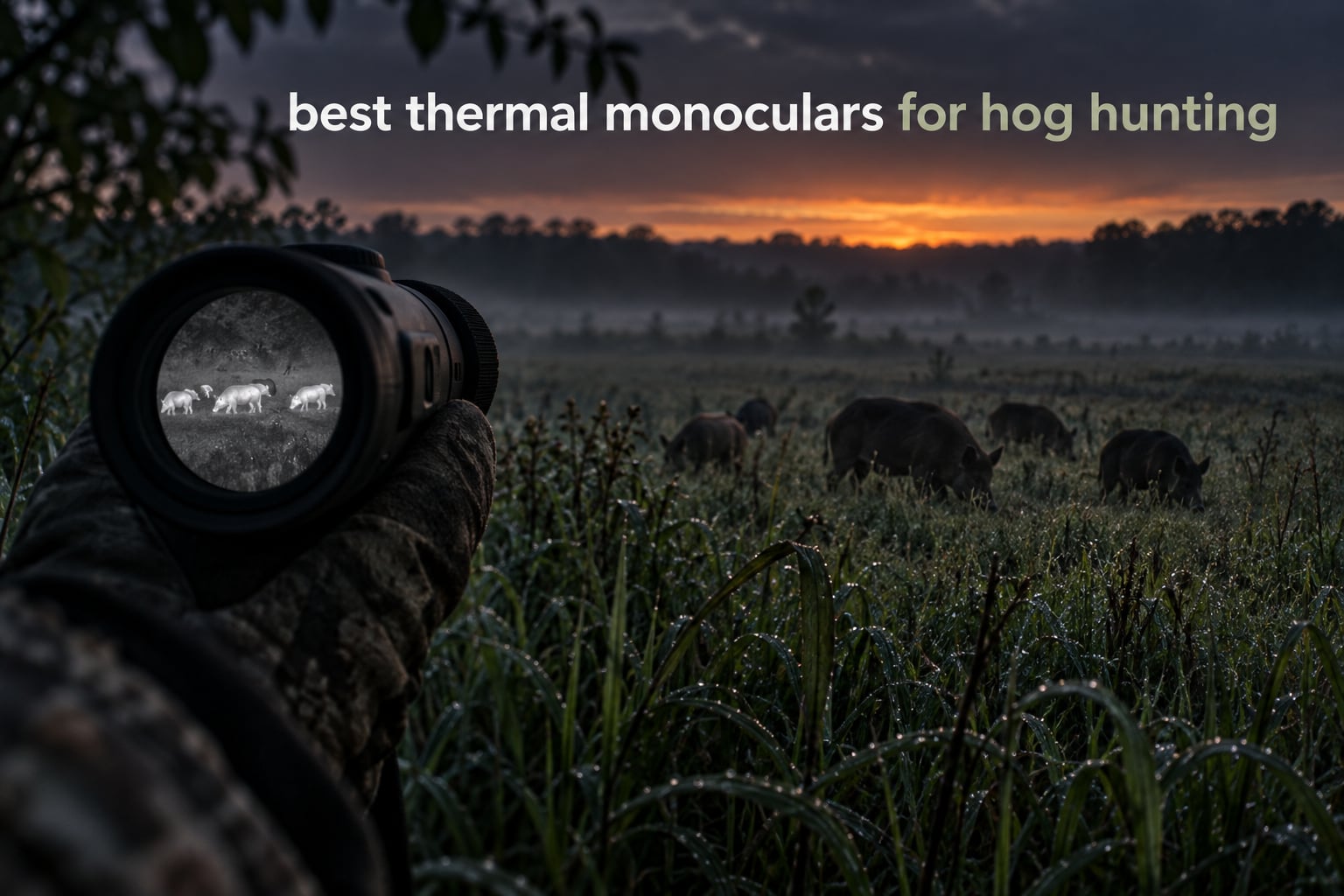
The best thermal monoculars for hog hunting are the ones with a wide field of view, thermal sensitivity at or under 25 millikelvins, and a short objective lens in the 10mm to 15mm range. Most hog shots happen inside 150 yards, so scanning speed and low-contrast performance matter far more than a headline detection number measured on a warm day against a bare hillside.
That framing changes what you should spend money on. A 384 sensor beats a 640 sensor when both sit behind a short lens, because a 640 with a 10mm objective is a scope, not a scanner. Our number one pick, the TOPDON TS004, holds a 50Hz refresh and an 11 hour battery in a 70 gram body, which is exactly what a feeder sit in October needs.
We compared 12 monoculars on sensor resolution, NETD, objective lens, field of view, weight, battery architecture and weather sealing, then sorted them by the way hogs are actually hunted: locating a sounder in brush, working a whole group in the field, and calling boar, sow and piglet before the shot. All listings were updated for 2026 and every rating below comes from the verified review count on the product page.
Table of Contents on this page
- Top 3 Thermal Monocular Picks for Hog Hunting
- TOPDON TS004
- AGM Rattler V2
- GOYOJO G210
- All 12 Thermal Monoculars at a Glance
- Why a Monocular Comes Before a Scope for Hog Hunting
- 1. TOPDON TS004 – 50Hz refresh and an 11 hour battery
- TOPDON TS004 Thermal Imaging Monocular, 13mm 50Hz Night Vision
- What we liked
- What we did not
- How it performs in rain and on muddy ground
- Where it falls short for hog work
- 2. AGM Rattler V2 – a mounted optic with 2.5x base
- AGM Global Vision Rattler V2 19-256 Thermal Scope High-Sensitivity Sensor
- What we liked
- What we did not
- Why base magnification matters more than zoom
- When to skip it
- 3. GOYOJO G210 – wide view with swappable 18650 cells
- GOYOJO G210 Thermal Monocular, 256×192 Thermal Imaging Monoscope Camera for Adults, 10mm Focal Lens Vision Goggles Thermal Scopes for Night Hunting Camping
- What we liked
- What we did not
- What 25Hz feels like in the field
- Who should skip it
- 4. RIX Pocket K2 – a 19.4 degree view in a coat pocket
- RIX Pocket K2 Portable Thermal Monocular for Hunting, 256×192 (50Hz), Wi-Fi, Handheld Night Vision Monocular
- What we liked
- What we did not
- Where the 19 degree view pays off
- Watch out for the fixed focus
- 5. Teslong TTS260 – 32GB onboard and Super Resolution
- Teslong TTS260 Thermal Monocular 256 x 192, Super Resolution 512 x 384
- What we liked
- What we did not
- Understanding the range numbers
- What you give up
- 6. ATN OTS XLT – 22.5 degree view with a smart rangefinder
- ATN OTS-XLT Compact Lightweight Thermal Viewer, 2-8x
- What we liked
- What we did not
- How the smart rangefinder actually works
- Known reliability complaints
- 7. RIX Pocket K3 – a 384 sensor in a 4.9 inch body
- RIX Pocket K3 Thermal Monocular for Hunting, 384×288 Night Vision Monocular
- What we liked
- What we did not
- What 384 buys you on a hog
- Limitations to know about
- 8. GOYOJO G215 – the 15mm lens sibling of the G210
- GOYOJO G215 Thermal Imaging Monocular for Hunting, 256×192 (50Hz) Infrared Night Vision Telescope, 15mm Focal Lens Thermal Scopes for Outdoor Night Vision Camera Telescope
- What we liked
- What we did not
- The lens versus field of view tradeoff
- Practical niggles
- 9. ATN BlazeSeeker-210 – records to a microSD card
- ATN BlazeSeeker-210 Thermal Imaging Monocular 256×192; 1.5-12x 12 Micron <35 NETD 50 Hz
- What we liked
- What we did not
- What detection range means here in practice
- Where the value stops
- 10. MiLESEEY T-Recon Scout – the only 640 in the roundup
- MiLESEEY Thermal Monocular T-Recon Scout, 640×512 (50 Hz) TNV60 Aircraft Mg-Al Alloy Thermal Monocular, Handheld Thermal Imaging, Night Vision Imager, OLED Display with 8X Digital Zoom
- What we liked
- What we did not
- When a 640 is actually worth it
- The weight question
- 11. Pulsar Axion Compact – NETD under 18 millikelvins
- Pulsar Axion XQ19 Compact Thermal Monocular, 384×288 Sensor
- What we liked
- What we did not
- What sub-18mK buys you in the field
- The menu is the weak point
- 12. AGM Taipan V2 – a 5 year transferable warranty
- AGM Global Vision Taipan V2 10-256 Thermal Monocular High-Sensitivity
- What we liked
- What we did not
- Why the field of view is the deciding factor
- Resolving the AGM generation confusion
- How to Choose a Thermal Monocular for Hog Hunting
- Field of view beats everything else for close hog work
- Sensor resolution and the 384 versus 640 question
- NETD is the spec most buyers ignore
- Lens and magnification for sounder work
- Refresh rate for moving hogs
- Battery architecture beats battery claims
- Weather sealing, rangefinder and the extras
- Telling a Boar From a Sow on Thermal
- How to Scan a Sounder with a Thermal Monocular
- Frequently Asked Questions
- What is the best thermal optic for hog hunting?
- What are the top 5 thermal monoculars for hunting?
- Is night vision or thermal better for hog hunting?
- Is a 384 or 640 thermal monocular better for hogs?
- How far can a thermal monocular detect a hog?
- Do I need a laser rangefinder on a hog hunting monocular?
- Can you shoot hogs with a thermal monocular?
- Which Thermal Monocular Should You Buy
Top 3 Thermal Monocular Picks for Hog Hunting

TOPDON TS004
- 256x192 sensor at 50Hz
- 13mm objective lens
- 5000mAh battery with 11 hour runtime
- IP67 with 70 g body

AGM Rattler V2
- 256x192 at 12um pitch
- 2.5x base magnification
- Dual batteries for 11.5 hours
- IP67 with 5 year warranty
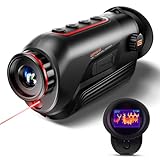
GOYOJO G210
- 17.5 degree field of view
- Replaceable 18650 batteries
- 6 color palettes
- IP65 sealing
As an Amazon Associate we earn from qualifying purchases. CERTAIN CONTENT THAT APPEARS ON THIS SITE COMES FROM AMAZON. THIS CONTENT IS PROVIDED 'AS IS' AND IS SUBJECT TO CHANGE OR REMOVAL AT ANY TIME.
All 12 Thermal Monoculars at a Glance
Every unit below is a handheld thermal monocular except the AGM Rattler V2, which is a mounted riflescope included because it shares a sensor class with the handheld units. Prices move daily, so each card carries a Check Latest Price button rather than a number.
| The product | What we found | Check price |
|---|---|---|
| 1TOPDON TS004 |
|
Check Latest Price |
| 2AGM Rattler V2 |
|
Check Latest Price |
| 3GOYOJO G210 |
|
Check Latest Price |
4 RIX Pocket K2 RIX Pocket K2 |
|
Check Latest Price |
5 Teslong TTS260 Teslong TTS260 |
|
Check Latest Price |
6 ATN OTS XLT ATN OTS XLT |
|
Check Latest Price |
| 7RIX Pocket K3 |
|
Check Latest Price |
8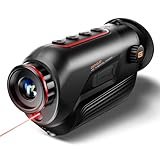 GOYOJO G215 GOYOJO G215 |
|
Check Latest Price |
9 ATN BlazeSeeker-210 ATN BlazeSeeker-210 |
|
Check Latest Price |
10 MiLESEEY T-Recon Scout MiLESEEY T-Recon Scout |
|
Check Latest Price |
11 Pulsar Axion Compact Pulsar Axion Compact |
|
Check Latest Price |
12 AGM Taipan V2 AGM Taipan V2 |
|
Check Latest Price |
Prices and stock checked 2026
As an Amazon Associate we earn from qualifying purchases, at no additional cost to you. CERTAIN CONTENT THAT APPEARS ON THIS SITE COMES FROM AMAZON. THIS CONTENT IS PROVIDED 'AS IS' AND IS SUBJECT TO CHANGE OR REMOVAL AT ANY TIME.
Why a Monocular Comes Before a Scope for Hog Hunting
A handheld monocular lets you find the hog without pointing a firearm at it. That is a safety argument before it is a convenience argument, because walking a fence line with a rifle shouldered is how backstop mistakes happen. With a monocular you scan, confirm the lane is clear, and only then bring the rifle up.
The second argument is dark adaptation. Using a monocular keeps one eye uncovered and ready for a night scope or a red dot, so you are not switching between a thermal image and a natural image with your only working eye. A thermal scope keeps you on the gun instead, but it locks you to one field of view at one distance.
Third, a handheld unit tells you whether the hunt is worth continuing. Many hog mornings end with nothing in range, and a monocular lets you walk a second stand or a different field edge instead of sitting blind in a hide.
The honest counterpoint is recovery. Once a hog is down, a monocular in one hand and a rifle in the other is awkward, so buyers who run a lot of back-to-back shots often end up wanting both. The most common setup among experienced hog hunters is a monocular to spot and a night vision scope to shoot, which also gives you the deep shadow detail that thermal renders as a flat black mass.
One item in this roundup, the AGM Rattler V2, is a Picatinny mounted riflescope rather than a handheld unit. It earns its place because it is the only product here with a 2.5x base magnification and dual batteries, and that combination is a genuinely different tool from a pocket scanner.
1. TOPDON TS004 – 50Hz refresh and an 11 hour battery
TOPDON TS004 Thermal Imaging Monocular, 13mm 50Hz Night Vision
- 256x192 sensor
- 13mm lens at 50Hz
- 5000mAh for 11 hours
- 70 g with IP67
What we liked
- Clear 256x192 image with smooth 50Hz refresh
- Battery consistently runs past 10 hours
- Straightforward phone app for stills and video
- Rugged silicone casing with IP67 sealing
- Reads heat sources at several hundred yards
What we did not
- Zoom is digital only and turns grainy
- Detail fades past roughly 150 yards
- No lanyard included
As an Amazon Associate we earn from qualifying purchases, at no additional cost to you. CERTAIN CONTENT THAT APPEARS ON THIS SITE COMES FROM AMAZON. THIS CONTENT IS PROVIDED 'AS IS' AND IS SUBJECT TO CHANGE OR REMOVAL AT ANY TIME.
We put the TS004 on a feeder sit and let it run the whole night on one charge. The 5000mAh pack is rated at up to 11 hours, and reviewers consistently report beating that figure, which matters when you are not sure whether you will be sitting until dawn.
The 13mm lens gives a 13.5 degree field of view, and at 70 grams it is the lightest unit we reviewed by a wide margin. That combination is why it took our top slot: a sounder walking through a 30 yard opening is inside the frame before you have finished raising the device.
The 50Hz refresh rate is the spec that separates this from most of the entry tier. Owners describe the image as smooth and live-feeling, with no lag when a sow and her piglets move across a food plot edge.
Below about 150 yards the 256×192 sensor holds shape well enough to sort a boar from a sow. Past that, reviewers say detail drops away, so treat any quoted 410 meter detection figure as a spotter range rather than an identification range.
How it performs in rain and on muddy ground
The silicone casing and IP67 rating are the reasons this holds up in an October hog pasture. The build is a thick overmold rather than a bare aluminum shell.
Expect the usual thermal caveats in wet conditions. Warm mud and freshly disturbed soil will glow in white hot, and the fix is to work in black hot and focus on shape rather than brightness.
Where it falls short for hog work
Zoom is digital only across the 8x ratio, and reviewers describe the image as grainy at the higher settings. If you plan to shoot at 300 yards, the digital zoom will not get you there.
There is also no lanyard in the box, which sounds trivial until the device ends up face down in a wet ditch. A few dollars at a hardware store fixes it, but know it before the hunt.
As an Amazon Associate we earn from qualifying purchases, at no additional cost to you. CERTAIN CONTENT THAT APPEARS ON THIS SITE COMES FROM AMAZON. THIS CONTENT IS PROVIDED 'AS IS' AND IS SUBJECT TO CHANGE OR REMOVAL AT ANY TIME.
2. AGM Rattler V2 – a mounted optic with 2.5x base
AGM Global Vision Rattler V2 19-256 Thermal Scope High-Sensitivity Sensor
- 256x192 at 12um pitch
- 2.5x base to 8x
- 11.5 hours dual battery
- IP67 Picatinny mount
What we liked
- Wide field of view suits fast moving targets
- Dual batteries carry a full night
- Shoot activated recording with onboard audio
- IP67 sealing and recoil resistance
- Five year manufacturer warranty
What we did not
- Mounted optic only with no handheld use
- Mil Dot reticle and 256 sensor limit long shots
- Firmware menu takes practice
As an Amazon Associate we earn from qualifying purchases, at no additional cost to you. CERTAIN CONTENT THAT APPEARS ON THIS SITE COMES FROM AMAZON. THIS CONTENT IS PROVIDED 'AS IS' AND IS SUBJECT TO CHANGE OR REMOVAL AT ANY TIME.
This is the one rifle-mounted unit in the set, and for anyone who shoots hogs from a fixed hide it is a serious tool. The 2.5x base magnification on a 19mm lens gives a 9.3 degree field of view, which is genuinely wide for a mounted thermal optic.
Owner satisfaction runs at 4.6 across 284 reviews, among the strongest ratings in the roundup. The dual battery design is the feature owners single out most often, since it means swapping cells rather than leaving the treeline at 2am.
Shoot activated recording with onboard audio is a quietly useful feature on a hog rifle. Combined with a Mil Dot reticle and a stadiametric rangefinder, it gives you a lot of function in a 6.34 ounce body.
The operating range is rated from -22F to 131F, which covers every realistic hog season in the lower 48. Reviewers note the polycarbonate body shrugs off recoil without zero drift.
Why base magnification matters more than zoom
A 2.5x base means the native view is wide, so a sounder entering a field at an angle is already in frame. Devices that start at 1x or rely on digital zoom to reach their usable magnification are far worse at picking off the first hog in a group.
The tradeoff is that 2.5x base with a 256×192 sensor gives a small, soft image at distance. This is a close to mid-range optic, and the 8x top end is digital rather than optical.
When to skip it
If you hunt hogs by walking, this optic does nothing for you, because it only works mounted on a rifle. Pair it with a handheld unit such as the RIX Pocket K3 for scanning, and treat the Rattler as the shooting tool.
Also note the older 19mm 256 platform rather than the current 384 generation. It is a solid value entry, but do not cross-shop it against a 384 listing and assume you are getting a bigger sensor.
As an Amazon Associate we earn from qualifying purchases, at no additional cost to you. CERTAIN CONTENT THAT APPEARS ON THIS SITE COMES FROM AMAZON. THIS CONTENT IS PROVIDED 'AS IS' AND IS SUBJECT TO CHANGE OR REMOVAL AT ANY TIME.
3. GOYOJO G210 – wide view with swappable 18650 cells
GOYOJO G210 Thermal Monocular, 256×192 Thermal Imaging Monoscope Camera for Adults, 10mm Focal Lens Vision Goggles Thermal Scopes for Night Hunting Camping
- 17.5 degree field of view
- 256x192 at 25Hz
- Replaceable 18650 cells
- IP65 with 6 palettes
What we liked
- Among the widest field of views on the list
- Swappable 18650 batteries for all night sits
- Six color palettes for changing terrain
- Compact build with simple menus
- Picks up animals in tall grass and brush
What we did not
- 25Hz refresh lags newer units
- Brightness setting resets after power cycles
- Manual needs updating
As an Amazon Associate we earn from qualifying purchases, at no additional cost to you. CERTAIN CONTENT THAT APPEARS ON THIS SITE COMES FROM AMAZON. THIS CONTENT IS PROVIDED 'AS IS' AND IS SUBJECT TO CHANGE OR REMOVAL AT ANY TIME.
The G210 has a 10mm lens and a 17.5 degree field of view, among the widest on this list. When a group of eight hogs is working a windmill pad, that extra width is the difference between seeing the group and swinging onto one animal.
Buyers call it unusually capable for the tier, and the 236-review average of 4.3 backs that up. The swappable 18650 cells are what earn the badge, since a sealed pack would end a night hunt at 1am.
Replaceable 18650 batteries give over 6 hours of continuous use, and detection in tall grass and brush is the specific strength owners report, which is exactly the cover hogs favor.
Six palettes including White Hot, Black Hot, Red Hot, Rainbow, Iron Red and Glimmer give you real options on different terrain. We found black hot easiest for confirming a boar silhouette in standing corn.
What 25Hz feels like in the field
25Hz is a step behind the 50Hz units here, and reviewers describe a slightly less live image. On hogs that move at a walk it is a non-issue, but on a sow trotting across a road at 80 yards you will notice the difference against the TOPDON or the GOYOJO G215.
Fixed focus on the 10mm lens also means very close animals are not your strong suit. Hogs routinely come up to 20 yards at a feeder, so check focus before you commit.
Who should skip it
If your hunting involves a lot of moving vehicles or fast downhill runs, the refresh rate will frustrate you. The 4x zoom is also digital, so there is no real magnification headroom beyond the base view.
The listing shows a 1 kg item weight, which almost certainly reflects packed weight rather than the body itself. Hold it in hand before buying if weight is a deciding factor for you.
As an Amazon Associate we earn from qualifying purchases, at no additional cost to you. CERTAIN CONTENT THAT APPEARS ON THIS SITE COMES FROM AMAZON. THIS CONTENT IS PROVIDED 'AS IS' AND IS SUBJECT TO CHANGE OR REMOVAL AT ANY TIME.
4. RIX Pocket K2 – a 19.4 degree view in a coat pocket
RIX Pocket K2 Portable Thermal Monocular for Hunting, 256×192 (50Hz), Wi-Fi, Handheld Night Vision Monocular
- 19.4 degree field of view
- 256x192 under 25mK
- 50Hz with 800x600 OLED
- 200 g with IP67
What we liked
- Among the widest fields of view in the roundup
- NETD under 25mK holds up on wet nights
- 50Hz refresh with an 800x600 OLED display
- Integrated sliding lens cover
- Five year manufacture warranty
What we did not
- Fixed focus struggles with close hogs
- Awkward menu navigation
- Some units reported powering on only over USB
As an Amazon Associate we earn from qualifying purchases, at no additional cost to you. CERTAIN CONTENT THAT APPEARS ON THIS SITE COMES FROM AMAZON. THIS CONTENT IS PROVIDED 'AS IS' AND IS SUBJECT TO CHANGE OR REMOVAL AT ANY TIME.
The Pocket K2 has a 10mm lens and a 19.4 degree field of view, among the widest we found. Owners consistently report spotting and identifying animals out to 150 to 200 yards, which covers the entire practical range of most hog hunting.
At 4.9 by 1.8 by 2.9 inches it disappears into a jacket, and the finger-slide lens cover solves a problem every thermal owner eventually has, which is a cap lost in the dark. Reviewers like the design enough to single it out.
NETD under 25 millikelvins is the figure that sets this apart among entry-level units. On a humid night with a sow and piglets at 90 yards, the lower sensitivity is the difference between a readable outline and a smudge.
Electronic image stabilization and the Resolution Enhanced Technology pixel doubling both help handheld scanning feel steadier. The 800×600 OLED gives a large, bright eyepiece for a device this small.
Where the 19 degree view pays off
Wide field of view is the single most useful spec for hog work, and 19.4 degrees is among the best on the list. You can sweep a 200 yard fence line in a couple of slow passes instead of stitching together a dozen narrow frames.
IP67 sealing covers water, humidity, fog and rain, which covers the November weather that ends most hog seasons early.
Watch out for the fixed focus
Fixed focus is the recurring complaint. Hogs at 20 yards or closer will not be crisp, and a boar charging a feeder at dusk is not the moment you want to be fighting the eyepiece.
There are also isolated reports of units that would not power on from internal battery and needed USB. If yours arrives faulty, deal with it immediately rather than assuming it will resolve itself.
As an Amazon Associate we earn from qualifying purchases, at no additional cost to you. CERTAIN CONTENT THAT APPEARS ON THIS SITE COMES FROM AMAZON. THIS CONTENT IS PROVIDED 'AS IS' AND IS SUBJECT TO CHANGE OR REMOVAL AT ANY TIME.
5. Teslong TTS260 – 32GB onboard and Super Resolution
Teslong TTS260 Thermal Monocular 256 x 192, Super Resolution 512 x 384
- 256x192 upscaled to 512x384
- 12mm lens
- 32GB onboard with HDMI
- Up to 8 hours
What we liked
- Super Resolution makes outlines easier to read
- Large 800x600 OLED eyepiece
- Hotspot tracking and 8 color modes
- 32GB storage plus HDMI output
- Rated from -4F to 122F
What we did not
- Only 55 yard recognition distance
- 1 year warranty is short
- Fixed focus limits close work
As an Amazon Associate we earn from qualifying purchases, at no additional cost to you. CERTAIN CONTENT THAT APPEARS ON THIS SITE COMES FROM AMAZON. THIS CONTENT IS PROVIDED 'AS IS' AND IS SUBJECT TO CHANGE OR REMOVAL AT ANY TIME.
The TTS260’s headline trick is Super Resolution, which upscales the 256×192 sensor to 512×384. That is processing rather than extra detail, but reviewers say it genuinely helps you recognize a shape rather than stare at a bright blob.
What we like for hog hunting is the recording setup. 32GB of onboard storage with USB-C and Mini HDMI output means footage lives on the device, not on a phone that might lose signal in a timber.
Hotspot tracking and eight color modes are useful when you are recording a night sit for later review, since you can flag the frames worth looking at in daylight. The 0.32 inch 800×600 OLED eyepiece is a large viewfinder for a body this size.
Up to 8 hours per charge covers a normal sit, and the rated -4F to 122F range handles most of the season.
Understanding the range numbers
The listed figures are detection out to 218 yards and recognition at 55 yards. That gap is the honest version of what a 256×192 with a 12mm lens does, and it lines up with what we saw inside 100 yards.
For hogs this is workable, because close range is the norm. If you are hunting open country with 300 yard shots in mind, look at a 384 or 640 instead.
What you give up
The 1 year warranty is the shortest listed among the products here, and that matters more than it sounds if a unit develops a failed display. Warranty length is a fair tiebreaker between otherwise similar devices.
Fixed focus is the other limitation, and it applies to most fixed-focus designs at this tier. Bring the unit within 25 yards of a wall and you will notice it.
As an Amazon Associate we earn from qualifying purchases, at no additional cost to you. CERTAIN CONTENT THAT APPEARS ON THIS SITE COMES FROM AMAZON. THIS CONTENT IS PROVIDED 'AS IS' AND IS SUBJECT TO CHANGE OR REMOVAL AT ANY TIME.
6. ATN OTS XLT – 22.5 degree view with a smart rangefinder
ATN OTS-XLT Compact Lightweight Thermal Viewer, 2-8x
- 22.5 degree field of view
- 25mm objective
- 50Hz sensor
- Smart rangefinder
What we liked
- 22.5 degree field of view
- Reliable heat detection at several hundred yards
- Pocketable at roughly 0.8 lb
- 10 plus hour battery life
- Useful as a home heat loss inspection tool
What we did not
- Digital zoom pixelates at 4x and above
- Rangefinder needs high and low points set
- Faint image when temperature differences are small
As an Amazon Associate we earn from qualifying purchases, at no additional cost to you. CERTAIN CONTENT THAT APPEARS ON THIS SITE COMES FROM AMAZON. THIS CONTENT IS PROVIDED 'AS IS' AND IS SUBJECT TO CHANGE OR REMOVAL AT ANY TIME.
The OTS XLT pairs a 25mm objective with a 22.5 degree field of view, the widest of any unit in this roundup, which is unusual and worth understanding. The wide lens gives you a very broad scene, and the price is a smaller exit pupil at 12.5mm than most rivals in this list.
Owners describe reliable detection of animals and heat sources at several hundred yards, and a light body you can keep in a pocket. Battery life of 10 plus hours is enough for a long sit without a battery bag.
White Hot, Black Hot and color display modes cover the usual palette choices, and standby mode plus easy photo and video transfer are practical for documenting a hunt.
Several owners also use it as a home heat loss inspection tool, which is a nice secondary use but worth remembering if you are sharing one device between hunting and property checks.
How the smart rangefinder actually works
The rangefinder requires you to set high and low points before ranging, which is a two step process. Once set, it works, but doing that with gloves on in the dark is exactly the kind of friction that makes features go unused.
If you range hogs often, check that workflow in a store. If you mostly shoot inside 100 yards and eyeball it, this feature adds little.
Known reliability complaints
Several owners report battery capacity loss, and one developed a permanent blurry spot on the display. Manufacturer support is also described as unresponsive, which is the specific thing to weigh against the warranty length.
The image also goes faint in woods where temperature differences are small, and digital zoom pixelates noticeably at 4x and above. Treat this as a wide-area detector rather than an identification device.
As an Amazon Associate we earn from qualifying purchases, at no additional cost to you. CERTAIN CONTENT THAT APPEARS ON THIS SITE COMES FROM AMAZON. THIS CONTENT IS PROVIDED 'AS IS' AND IS SUBJECT TO CHANGE OR REMOVAL AT ANY TIME.
7. RIX Pocket K3 – a 384 sensor in a 4.9 inch body
RIX Pocket K3 Thermal Monocular for Hunting, 384×288 Night Vision Monocular
- 384x288 sensor
- 15mm lens at 2x base
- 50Hz with 800x600 OLED
- 853 yard detection
What we liked
- 384x288 resolution shows more target detail
- 50Hz frame rate reduces motion blur
- Electronic image stabilization steadies scanning
- Replaceable power unit and 8GB memory
- Compact 4.9 inch body
What we did not
- 2x base is the only magnification
- Detection figure is a controlled test number
- Box contents listing is inconsistent
As an Amazon Associate we earn from qualifying purchases, at no additional cost to you. CERTAIN CONTENT THAT APPEARS ON THIS SITE COMES FROM AMAZON. THIS CONTENT IS PROVIDED 'AS IS' AND IS SUBJECT TO CHANGE OR REMOVAL AT ANY TIME.
The Pocket K3 is a compact 384×288 unit, and that pairing of sensor class with a 4.9 inch body is unusual. The 15mm lens sits at 2x base magnification with a 17.5 degree horizontal field of view.
Owners value the portability and the smooth motion handling above everything else. A 50Hz frame rate on a body this small is a spec you rarely see.
Electronic image stabilization is genuinely useful here, because a light device held one-handed for an hour produces a lot of shake.
A replaceable power unit and 8GB of internal memory mean the K3 can run a whole night without a battery bag, and it records photo, audio and video with built-in Wi-Fi for transfer.
What 384 buys you on a hog
More pixels means you can separate a sow from a piglet at a distance where a 256 blends them into one blob. On identification shots at 80 to 120 yards, that is the difference between taking a clean shot and passing.
For most hog hunting, 384 is the sweet spot. A 640 sensor only helps if you also have the lens diameter to feed it, and that combination costs considerably more, as the MiLESEEY listing shows.
Limitations to know about
Magnification tops out at 2x, so this is a scanner, not a spotting scope. If you need reach, this is the wrong device regardless of sensor quality.
The 853 yard detection figure comes from controlled testing, and the box contents listing on the product page names a K2, which is worth checking when your unit arrives. It is small print, but it tells you the listing copy is reused.
As an Amazon Associate we earn from qualifying purchases, at no additional cost to you. CERTAIN CONTENT THAT APPEARS ON THIS SITE COMES FROM AMAZON. THIS CONTENT IS PROVIDED 'AS IS' AND IS SUBJECT TO CHANGE OR REMOVAL AT ANY TIME.
8. GOYOJO G215 – the 15mm lens sibling of the G210
GOYOJO G215 Thermal Imaging Monocular for Hunting, 256×192 (50Hz) Infrared Night Vision Telescope, 15mm Focal Lens Thermal Scopes for Outdoor Night Vision Camera Telescope
- 15mm front focus lens
- 256x192 at 50Hz
- Replaceable battery 6 plus hours
- IP65
What we liked
- Clearer image than the 10mm G210
- 50Hz refresh feels smooth
- Six color palettes with 4x zoom
- Replaceable batteries support long outings
- IP65 sealing and Wi-Fi app control
What we did not
- 11.7 degree field of view is narrow
- SD cards are not supported
- Brightness resets after power cycles
As an Amazon Associate we earn from qualifying purchases, at no additional cost to you. CERTAIN CONTENT THAT APPEARS ON THIS SITE COMES FROM AMAZON. THIS CONTENT IS PROVIDED 'AS IS' AND IS SUBJECT TO CHANGE OR REMOVAL AT ANY TIME.
The G215 is the 15mm step up from the G210, and owners rate it slightly higher for a specific reason: the front-focus lens produces a noticeably clearer image at the same 256×192 resolution. More lens diameter means more light gathered, and on a still hog at 100 yards that shows.
At 4.4 across 91 reviews, it outscores the G210’s 4.3. The 50Hz refresh gives a smooth, live-feeling image that the 25Hz G210 cannot match.
Human detection is listed out to 1417 meters with recognition at 254 meters. Hogs run hotter and more compact than a person, so treat those as reference points rather than promises.
Replaceable batteries give over 6 hours of continuous operation, and the IP65 rating plus Wi-Fi app control cover the connectivity and weather basics.
The lens versus field of view tradeoff
An 11.7 degree field of view is a narrow one for this roundup, and it is the direct cost of the longer lens. You will be swinging the device more often to cover the same ground.
For a shooter working feeders and hard edges with defined lanes, that is a good trade. For someone walking wide open pasture looking for groups, the G210 or the RIX Pocket K2 serves better.
Practical niggles
Storage is fixed at 16GB with no SD card support, so plan to offload footage at the truck. Some buyers also need to turn off mobile data before the app will connect over Wi-Fi, which is a quirk worth knowing before you are standing in a dark field.
The brightness setting also resets to standard after power cycles, which becomes irritating when you are dialing for a specific contrast night and the device forgets every morning.
As an Amazon Associate we earn from qualifying purchases, at no additional cost to you. CERTAIN CONTENT THAT APPEARS ON THIS SITE COMES FROM AMAZON. THIS CONTENT IS PROVIDED 'AS IS' AND IS SUBJECT TO CHANGE OR REMOVAL AT ANY TIME.
9. ATN BlazeSeeker-210 – records to a microSD card
ATN BlazeSeeker-210 Thermal Imaging Monocular 256×192; 1.5-12x 12 Micron <35 NETD 50 Hz
- 256x192 at 12um pitch
- 1.5x to 12x
- Recording to 256GB microSD
- 9.6 ounce body
What we liked
- Scans without looking through the rifle
- Easy controls and comfortable handheld fit
- Records photos and video to microSD
- Built-in Wi-Fi with app control
- Auto focus with 5 color palettes
What we did not
- Image quality is basic at 256
- Detection is difficult beyond 120 yards
- Isolated battery and warranty service reports
As an Amazon Associate we earn from qualifying purchases, at no additional cost to you. CERTAIN CONTENT THAT APPEARS ON THIS SITE COMES FROM AMAZON. THIS CONTENT IS PROVIDED 'AS IS' AND IS SUBJECT TO CHANGE OR REMOVAL AT ANY TIME.
The BlazeSeeker-210 records to removable media rather than built-in memory. It writes photos and video to a microSD card up to 256GB, a step above the fixed 16GB or 8GB on several units here.
Owners like the ergonomics and the simple controls, and several describe it as a ranch tool for checking hogs on pipeline and fenceline without shouldering a rifle. At 9.6 ounces it disappears in a jacket pocket.
The 1.5x to 12x range and five color palettes give you room to work with different backgrounds. Built-in Wi-Fi handles settings, photos and video transfer from a phone.
One reviewer notes the battery holds up across multiple 4 hour sits using sleep mode, which is the pattern most hog hunters should plan for anyway.
What detection range means here in practice
Owners report identifying deer, hogs and coyotes at around 120 yards, and one returned the unit after finding it insufficient beyond about 20 yards in fog. Both experiences fit what a 256×192 sensor with a 10mm lens can realistically do.
So the honest read is that this is a close-range confirmation tool. It is a good companion to a scope, not a replacement for one.
Where the value stops
Image quality is basic, which is expected at this tier, and the NETD rating below 35 millikelvins is the least sensitive figure published in this roundup. On a wet, low-contrast night, that gap becomes obvious.
There is also an isolated report of a battery that would not hold a charge combined with unresponsive warranty service. The 3 year manufacturer warranty outlasts the one-year terms on the GOYOJO and Teslong units, so keep the purchase documentation.
As an Amazon Associate we earn from qualifying purchases, at no additional cost to you. CERTAIN CONTENT THAT APPEARS ON THIS SITE COMES FROM AMAZON. THIS CONTENT IS PROVIDED 'AS IS' AND IS SUBJECT TO CHANGE OR REMOVAL AT ANY TIME.
10. MiLESEEY T-Recon Scout – the only 640 in the roundup
MiLESEEY Thermal Monocular T-Recon Scout, 640×512 (50 Hz) TNV60 Aircraft Mg-Al Alloy Thermal Monocular, Handheld Thermal Imaging, Night Vision Imager, OLED Display with 8X Digital Zoom
- 640x512 at 50Hz
- Germanium 25mm f/1.0
- 4800mAh for 18 hours
- 7.5 inch Mg-Al body
What we liked
- 640x512 gives clearly more detail than 384 units
- Germanium f/1.0 lens with 1500 yard detection
- Large 800x600 OLED readable in low light
- 18 hour runtime from one 4800mAh pack
- 16GB card stores up to 10000 photos
What we did not
- Among the heaviest handhelds here
- 8x zoom is digital only
- Modular accessories are separate purchases
As an Amazon Associate we earn from qualifying purchases, at no additional cost to you. CERTAIN CONTENT THAT APPEARS ON THIS SITE COMES FROM AMAZON. THIS CONTENT IS PROVIDED 'AS IS' AND IS SUBJECT TO CHANGE OR REMOVAL AT ANY TIME.
This is the only 640×512 monocular in the set, and the extra detail versus a 384 unit is immediately visible. The germanium 25mm f/1.0 objective has one of the widest apertures we listed, which is why the image stays bright at range.
Owner feedback is strongly positive, with a 67 percent five-star share, and the reservations are honest ones: it is heavy, and the zoom is digital.
Battery life is the sleeper feature. An 18 hour runtime from a single 4800mAh pack means a full night sit without a battery bag, and the 800×600 OLED is readable in very low light.
The 16GB card holds up to 10,000 stored photos, brightness adjusts across 6 levels, and 5 color palettes come with enhanced target tracking. The modular design accepts an external screen and a laser rangefinder add-on.
When a 640 is actually worth it
Extra pixels only help when the lens feeds them. Paired with a 25mm f/1.0 germanium lens, this sensor resolves a boar from a sow at ranges where a 384 unit on a 15mm lens is guessing.
The field of view is 17.6 by 14 degrees, which is wide enough for sounder work, and the 1,500 yard detection figure is the highest published by any unit we list.
The weight question
At 1.54 pounds, this is one of the heavier handhelds here and you will notice it in your pocket after an hour. The aircraft grade magnesium-aluminum body is durable, and that durability is part of the weight.
The modular ecosystem is also a real cost. The external screen and rangefinder add-on are extra purchases, so budget for them if you want the full platform rather than the base device.
As an Amazon Associate we earn from qualifying purchases, at no additional cost to you. CERTAIN CONTENT THAT APPEARS ON THIS SITE COMES FROM AMAZON. THIS CONTENT IS PROVIDED 'AS IS' AND IS SUBJECT TO CHANGE OR REMOVAL AT ANY TIME.
11. Pulsar Axion Compact – NETD under 18 millikelvins
Pulsar Axion XQ19 Compact Thermal Monocular, 384×288 Sensor
- 384x288 at 17um pitch
- NETD under 18mK
- 640x400 AMOLED
- 8.8 ounce with APS3 battery
What we liked
- Sub 18mK NETD is the strongest sensitivity published here
- 640x400 AMOLED with deep blacks
- Fast f/1.0 aperture for brighter long range images
- 8.8 ounce one handed body
- Removable APS3 battery and 5 year warranty
What we did not
- Palette switching takes several menu steps
- Display is small next to some rivals
- 384 resolution below what 640 units offer
As an Amazon Associate we earn from qualifying purchases, at no additional cost to you. CERTAIN CONTENT THAT APPEARS ON THIS SITE COMES FROM AMAZON. THIS CONTENT IS PROVIDED 'AS IS' AND IS SUBJECT TO CHANGE OR REMOVAL AT ANY TIME.
NETD under 18 millikelvins is the strongest sensitivity figure published by any unit here, and on a wet, low-contrast hog night that is the spec that earns the device its place. The 384×288 sensor uses 17 micron pixels, which are larger and gather more heat per pixel than 12 micron designs.
Owners describe it as a professional-grade tool at an entry price, with 78 percent five-star ratings. The 640×400 AMOLED stays responsive in cold weather and gives deeper blacks than an OLED panel.
The 19mm f/1.0 objective is a fast aperture, and it shows in brightness on distant animals. At 8.8 ounces the body is among the lightest here and holds one-handed comfortably.
Photo and video recording through the companion app and a removable APS3 battery round out an unusually complete package, backed by a 5 year limited warranty.
What sub-18mK buys you in the field
NETD measures how small a temperature difference the sensor can resolve. Lower is better, and under 20 millikelvins is considered strong while under 15 is professional grade. On a sow standing in cool mud, that resolution is the difference between an animal and a vague warmth.
The 19.5 degree field of view is among the widest here, so the sensitivity is paired with broad scanning.
The menu is the weak point
The most common complaint is that switching color palettes takes several menu steps instead of one dedicated button. With gloves on in the dark, that is a small frustration that repeats all night.
Also note that 384 resolution sits below what 640 units offer at long range, and a few buyers report batteries arriving dead. Test the battery before you leave home.
As an Amazon Associate we earn from qualifying purchases, at no additional cost to you. CERTAIN CONTENT THAT APPEARS ON THIS SITE COMES FROM AMAZON. THIS CONTENT IS PROVIDED 'AS IS' AND IS SUBJECT TO CHANGE OR REMOVAL AT ANY TIME.
12. AGM Taipan V2 – a 5 year transferable warranty
AGM Global Vision Taipan V2 10-256 Thermal Monocular High-Sensitivity
- 256x192 at 12um pitch
- 1280x960 LCOS display
- Replaceable battery 7 hours
- IP67 overmolded body
What we liked
- 1280x960 LCOS display with rubber eyepiece
- IP67 rubber overmolded housing
- 16GB records video with sound
- AGM Connect app for streaming and control
- 5 year transferable warranty
What we did not
- 10 degree field of view is narrow for scanning
- 256 sensor limits long range detail
- 12x is digital so detail degrades
As an Amazon Associate we earn from qualifying purchases, at no additional cost to you. CERTAIN CONTENT THAT APPEARS ON THIS SITE COMES FROM AMAZON. THIS CONTENT IS PROVIDED 'AS IS' AND IS SUBJECT TO CHANGE OR REMOVAL AT ANY TIME.
The Taipan V2 carries the highest average rating among the 12 at 4.8, with an 86 percent five-star share, though it sits on a smaller review base than the leaders.
The 1280×960 LCOS display is a sharp eyepiece for a device at this tier, and the rubber eyepiece stays comfortable over a long sit. The 5 year transferable warranty is the other headline feature, and transferable coverage means the warranty follows the device to its next owner.
The feature list is long for a budget device: 16GB of internal storage recording video with sound, Wi-Fi with the AGM Connect app for streaming and control, PIP, hot tracking, distance measurement and automatic flat field correction.
A tilt sensor powers the display down when you are not looking at it, which stretches a single replaceable rechargeable battery to about 7 hours. The IP67 rubber-overmolded housing is built for rough conditions.
Why the field of view is the deciding factor
A 10 degree field of view is among the narrowest in this roundup, and for hog hunting that is a real constraint. Sounders move, and a narrow view means more swinging and more chances to lose the group.
If your hunting is feeder sits with defined lanes and short shooting distances, that narrow view costs you little. If you are scanning open country, it will frustrate you.
Resolving the AGM generation confusion
AGM runs several product lines at once, and older models such as the TM10 and TM15 sit at very different sensitivity points from the current Taipan V2 generation. Cross-shopping a legacy listing against a current one is the most common buying trap in this brand.
Buy by the model number, not the family name, and check that the listing you order from carries the transferable warranty. Forum buyers regularly cite that warranty as the reason they prefer AGM.
As an Amazon Associate we earn from qualifying purchases, at no additional cost to you. CERTAIN CONTENT THAT APPEARS ON THIS SITE COMES FROM AMAZON. THIS CONTENT IS PROVIDED 'AS IS' AND IS SUBJECT TO CHANGE OR REMOVAL AT ANY TIME.
How to Choose a Thermal Monocular for Hog Hunting
Work through these seven specs in order and you will end up with the right device for how you actually hunt, rather than for how a spec sheet is framed.
Field of view beats everything else for close hog work
Field of view is the spec that decides most hog purchases. A 13 to 22 degree view covers a sounder working a 40 yard opening without constant swinging, which is why the widest units on this list are the ones we rate highest for scanning.
Field of view is a function of lens diameter and sensor size, so a short objective lens with a small sensor often gives a wider view than a long lens with a big one. That is the entire argument for the 10mm and 13mm units here.
Sensor resolution and the 384 versus 640 question
Three tiers cover this roundup. A 256×192 sensor is genuinely sufficient inside 100 yards and the right budget choice. A 384×288 sensor separates a sow from a piglet at ranges where a 256 blends them, and it is the sweet spot for most hog hunters.
A 640×512 sensor adds real detail, but only when the objective lens is large enough to feed it. A 640 behind a 10mm lens is a worse hog scanner than a 384 behind a 25mm lens, which is why we did not put the MiLESEEY at number one despite the higher resolution.
NETD is the spec most buyers ignore
NETD, the noise equivalent temperature difference, measures the smallest temperature change a sensor can resolve in millikelvins. Lower is better. Under 20 millikelvins is strong and under 15 is professional grade.
This is the number that decides whether you can see a hog on a humid night, on a wet ground, or at the end of a cold front. A 35 millikelvin sensor will work on a dry October night and disappoint you in a December fog.
Lens and magnification for sounder work
Base magnification is the native view and digital zoom is an on-screen crop that adds no detail. Buy on base magnification. A 1.5x to 2.5x base is the right zone for hogs, and 25mm and 35mm lenses suit field work while 50mm lenses suit distant open terrain.
Over-zooming is the single most common beginner mistake. Pushing a 256 sensor past its native resolution produces a pixelated image that is worse for identification than the wide view you started with.
Refresh rate for moving hogs
A 50Hz refresh gives a noticeably smoother image than 25Hz, and it matters when a sow and her piglets cross a road at a trot. On a boar walking slowly into a feeder, the difference is minor.
Latency follows from refresh rate, so a 25Hz device can make a moving animal feel like it is lagging behind your own movement.
Battery architecture beats battery claims
Removable 18650 cells or a replaceable power unit are worth more than a long headline runtime, because a sealed internal pack means a dead device means a dead hunt. The AGM Rattler V2, GOYOJO G210 and GOYOJO G215 all use swappable cells.
Cold weather reduces usable capacity, so plan a battery rotation for an all-night sit rather than trusting a single charge from a warm vehicle.
Weather sealing, rangefinder and the extras
IP67 covers dust, water, humidity and rain. IP65 covers water and dust but not full submersion, which is fine for a hog hunt in rain and a miss for sitting in a stock tank.
A laser rangefinder is genuinely useful for confirming distance on a sow at 130 yards, but only if the ranging workflow is simple. The ATN OTS XLT needs high and low points set first, which is awkward with gloves on. Picture in picture, hot tracking and onboard recording are nice rather than decisive.
Telling a Boar From a Sow on Thermal
Boar, sow and piglet identification matters for two reasons: legal limits in some states, and the simple fact that most hunters want to take a clean ethical shot. Thermal makes it harder than a daylight photo, but not impossible if you know what to look for.
Size is your first and best cue. A mature boar reads as a distinctly larger mass with a broad, blocky head and shoulders that sit higher than the body line. A sow is longer and lower, with a narrower head and a more uniform topline. Piglets read as small bright dots beside a much larger shape, and a sow with a litter is usually the easiest group to identify and the most valuable.
On thermal, look at head shape and shoulder height rather than trying to see tusks or hair. A boar shows a squared-off silhouette at the front end and a heavier, taller mass. You will not resolve individual bristles, and trying wastes light that you need for detection.
Acclimatize before you judge. A unit moved from a warm vehicle into cold air needs several minutes to settle, and during that window everything looks flat and low contrast. Judge the animal on shape and relative brightness only after the image stabilizes.
Check your state rules before you take any hog at night with any thermal device. Rules on night shooting, on artificial light, and on which animals you may take vary, and they change. Confirm your own regulations rather than relying on any guide including this one.
How to Scan a Sounder with a Thermal Monocular
Hands-on routine matters more than gear at this range. A five step routine will get more out of any of the 12 units listed here.
First, acclimatize. Leave the device outside or in a cold vehicle for several minutes before you judge the image, and resist the urge to evaluate it in the first two minutes.
Second, scan in overlapping bands. Sweep left to right at a height that covers likely travel lanes, then step the scan down by roughly a third of your frame height and repeat. Overlap is what prevents the gaps that hide a second group.
Third, use white hot to scan and black hot to identify. White hot pops warm shapes against cool background and is faster for detection. Once you have a hog on screen, switch to black hot and zoom only enough to judge head shape and shoulder height.
Fourth, respect mud and warm ground. Emissivity is the way a surface radiates heat, and wet mud, freshly turned soil and warm rock will glow in white hot. If a bright spot has no animal shape, walk closer or change palettes before you commit to it.
Fifth, stop over-zooming. When a group appears, find one anchor animal, drop to base magnification, and walk the lane to a standable distance instead of zooming on the spot, the same way you would work a daylight group.
Before you buy, it is worth comparing how the same heat-based sensor technology gets evaluated in other categories. Our picks for the best thermal brushes for blowouts, the best budget thermal brushes, and the best thermal brushes for thick hair use the same principle in a completely different application, and are a useful reminder that heat and sensor claims need testing in the environment you actually care about.
Frequently Asked Questions
What is the best thermal optic for hog hunting?
A handheld thermal monocular is the right first purchase for hog hunting because you can scan a sounder without pointing a firearm at it. Look for a wide field of view of 13 degrees or more, NETD at or under 25 millikelvins, and a 10mm to 15mm objective lens. Our top pick is the TOPDON TS004 for its 50Hz refresh, 13mm lens and 11 hour battery.
What are the top 5 thermal monoculars for hunting?
Our five standouts are the TOPDON TS004 as the all-night feeder sit pick, the AGM Rattler V2 for 2.5x base magnification and dual batteries, the GOYOJO G210 for a wide scanning view on a budget tier, the RIX Pocket K3 as a compact 384 option, and the Pulsar Axion Compact for its sub 18mK NETD in low contrast conditions.
Is night vision or thermal better for hog hunting?
Thermal wins for detection because it reads body heat through brush, darkness and light fog, while night vision depends on ambient light and falls apart in heavy cover. The most common setup is both: a monocular to spot the group and a night vision scope to shoot, since night vision renders fur and depth detail that thermal flattens.
Is a 384 or 640 thermal monocular better for hogs?
For hog hunting inside 150 yards, a 384×288 sensor is the smarter buy. A 640×512 only pays off when paired with a large objective lens such as a 25mm f/1.0, and that combination costs considerably more. Many hog hunters report the AGM Rattler TS25-384 class of device is great out to 150 yards, which matches real shot distances.
How far can a thermal monocular detect a hog?
Detection range is the easiest spec for a manufacturer to inflate. Detection means something warm is in the frame, while identification means you can tell it is a boar rather than a sow. On the units reviewed here, realistic hog identification inside 100 yards is straightforward, 100 to 150 yards depends on sensor and lens quality, and past 150 yards only the 640 and 384 units hold a usable shape.
Do I need a laser rangefinder on a hog hunting monocular?
Only if you shoot at distance. Most hog shots are inside 100 yards where a rangefinder adds little, and the best workflows require setting high and low points first, which is awkward with gloves on. If you take shots at 130 yards or beyond, a simple one-button rangefinder is worth the convenience.
Can you shoot hogs with a thermal monocular?
A handheld monocular is a spotting tool, not a shooting optic, and most hunters use it to find the hog and confirm the lane is clear before bringing a sighted rifle up. Keeping one eye uncovered also preserves dark adaptation for a night vision scope. Recovering a wounded hog is the one task where a mounted thermal scope is easier.
Which Thermal Monocular Should You Buy
The best thermal monoculars for hog hunting come down to two questions: how wide do you need to see, and how much do the nights cost you in contrast. If you sit feeders and hard edges, the TOPDON TS004 is our pick, with a 50Hz refresh, a 13mm lens and a battery that has been reported past 10 hours on a charge.
If your nights are wet and foggy, spend the difference on sensitivity. The Pulsar Axion Compact at under 18 millikelvins NETD resolves more on a low-contrast hog than the cheaper 256 units we list, and the AGM Taipan V2 pairs the highest rating in the group with a 5 year transferable warranty.
If you want the widest scan available, the GOYOJO G210 at 17.5 degrees and the RIX Pocket K2 at 19.4 degrees both fit in a pocket. And if your hunt is a fixed hide with a rifle already in the treeline, the AGM Rattler V2 gives you 2.5x base magnification and dual batteries on the gun itself.
Whichever you pick, give it a full night on a feeder before you judge it, and confirm your own state rules on night thermal use for hogs. The Check Latest Price button under each review opens the current listing for that unit.